
Food, fashion, and cultural traditions are fundamental drivers of human expression and community identity. While often categorized as separate aspects of daily life, they share a deep structural connection to how individuals understand their heritage and position themselves within a broader society. The dishes prepared in a home kitchen, the textiles chosen for daily dress or special occasions, the celebrations observed, and the social customs maintained all function as physical manifestations of historical continuity and personal choice.
Cultural identity is rarely static. It develops incrementally over time through the interaction of family heritage, geographical location, regional history, linguistic traditions, and personal experiences. Food and clothing serve as the primary visual and sensory tools that make this abstract sense of identity tangible in daily life. In an increasingly interconnected world, cultural identities adapt continuously, integrating modern influences with long-standing traditions.
Defining the Framework of Cultural Identity
Cultural identity refers to the sense of belonging that individuals derive from shared group traits, including traditions, values, historical narratives, languages, and behavioral customs. It provides a foundational framework through which people interpret their surroundings and relate to others.
An individual’s identity profile is shaped by multiple intersecting factors:
- Family Heritage: Intergenerational customs, oral histories, and inherited domestic routines.
- Geographic Context: Regional climates, local agricultural outputs, and regional trade histories.
- Social and Religious Institutions: Community celebrations, shared moral structures, and ceremonial rites.
- Personal Choice: Individual adaptations, international exposures, and conscious choices to retain or modify specific traditions.
Because these factors interact differently for every person, cultural identity remains distinctly individual even within the same geographic community. Two people raised in the same city may hold entirely different relationships with their regional heritage, illustrating that culture operates both as a collective legacy and as a personal interpretation.
Food as a Historical and Social Record
1. Environmental and Historical Influences on Cuisine
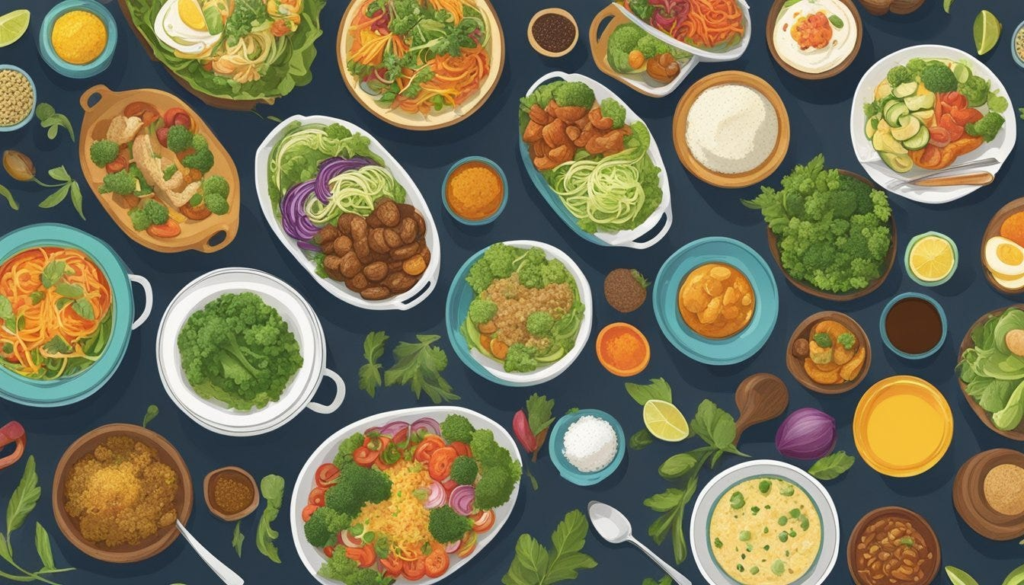
Culinary traditions function as living historical records of a community’s geographic environment and historical trade networks. Traditional recipes are defined by the indigenous crops, available livestock, regional preservation techniques, and local spices developed within a specific ecosystem over centuries.
For instance, coastal cuisines rely heavily on marine life, drying methods, and fermentation to preserve seafood, whereas arid inland regions develop recipes centered around drought-resistant grains, legumes, and preserved dairy. Cooking methods—such as slow roasting over open wood fires, steaming in native leaves, or quick stir-frying in heavy metal pans—reflect the historical availability of fuel and material resources.
2. Intergenerational Transmission and Memory
Food holds a powerful connection to memory and family continuity. Traditional recipes passed down through generations carry emotional significance alongside practical culinary instruction. A specific dish prepared during family gatherings or seasonal festivals can evoke memories of childhood homes, older relatives, and community bonds.
When families migrate or experience social shifts, culinary practices are often among the last cultural traditions to be abandoned. Preparing familiar meals in new environments provides a sense of emotional stability, continuity, and connection to one’s origins.
3. Culinary Adaptation in Modern Schedules
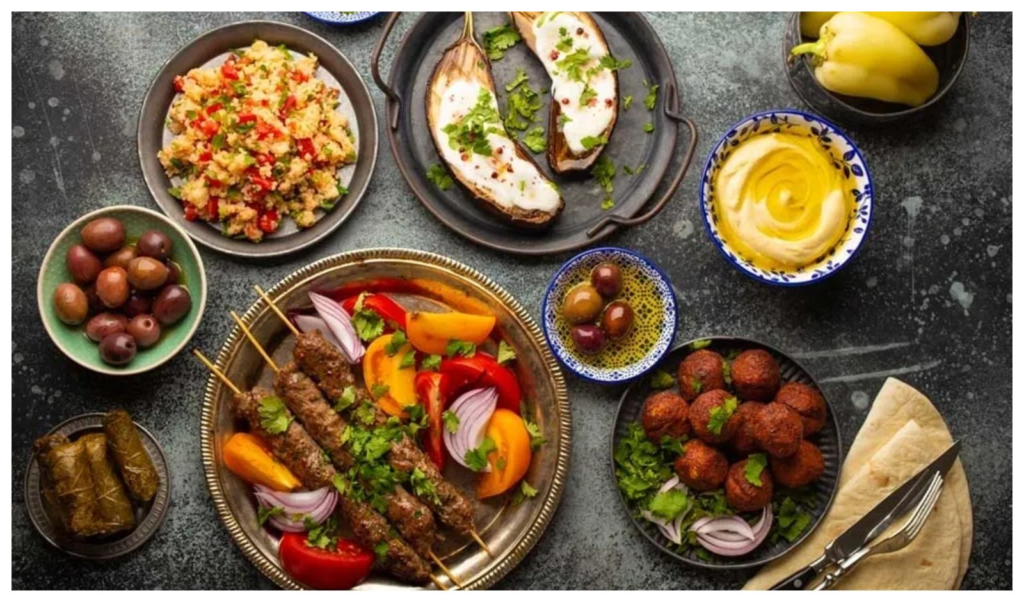
As work routines, supply chains, and dietary awareness evolve, traditional cooking methods adapt accordingly. Busy schedules have led to the adoption of time-saving appliances, pre-packaged ingredients, and streamlined preparation steps for complex traditional dishes.
Modifying a recipe for modern convenience or substituting hard-to-find ingredients does not strip a dish of its cultural value. Instead, these adaptations allow traditional culinary knowledge to remain relevant and functional within contemporary lifestyle constraints, ensuring its continued practice.
Expressing Identity Through Textiles and Fashion
1. Craftsmanship, Regional Identity, and Symbolism
Garments and textiles serve as direct visual expressions of cultural heritage. Traditional clothing reflects historical weaving techniques, regional dyeing methods, local embroidery styles, and functional tailoring adapted to climate conditions.
Textiles frequently incorporate symbolic elements:
- Color Palette: Specific colors may denote social standing, marital status, regional origins, or seasonal celebrations.
- Motifs and Patterns: Geometric patterns, floral embroidery, and stylized animal icons often carry historical narratives or spiritual protection symbols.
- Drapery and Fit: Tailoring methods reflect regional norms regarding modesty, climate functionality, and material availability.
For example, the textile traditions of South Asia exhibit immense regional variation. Distinct weaving techniques, hand-block printing styles, and embroidery methods belong to specific geographical districts, allowing observers to identify a garment’s origin through its weave and pattern alone. Similar textile diversity exists across indigenous cultures worldwide.
2. Synthesis of Traditional and Contemporary Fashion
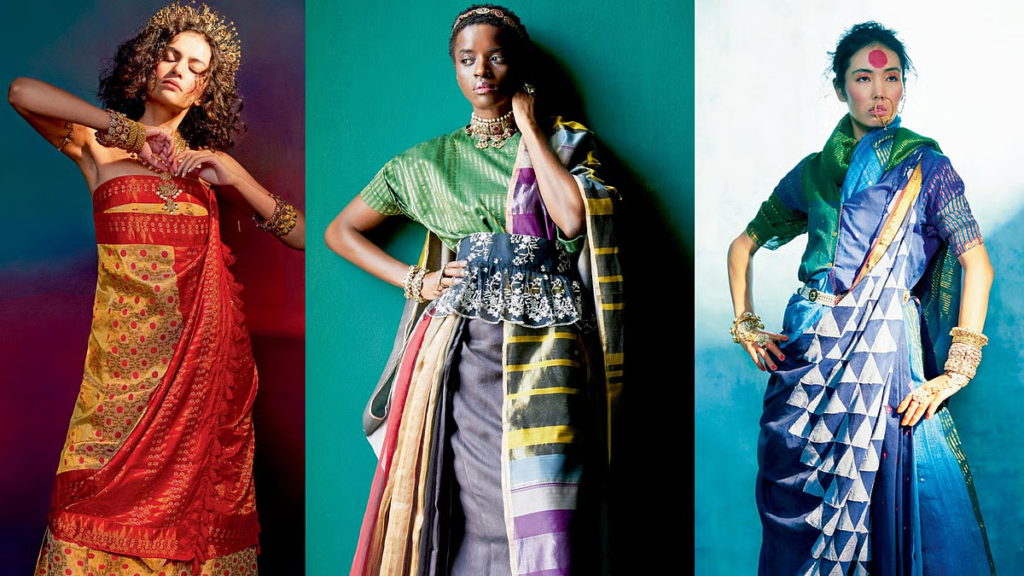
Modern fashion offers extensive opportunities to integrate traditional elements into contemporary wardrobes. Designers and individuals frequently blend classic textiles with modern silhouettes, pairing handcrafted traditional garments with contemporary accessories or incorporating regional patterns into casual workwear.
This synthesis prevents traditional attire from being relegated exclusively to museums or ceremonial events. By integrating traditional craftsmanship into modern fashion contexts, young designers and artisan communities sustain regional textile economies while making cultural dress accessible to broader, international audiences.
Cultural Expression Matrix
| Domain | Traditional Component | Modern Adaptation | Cultural Function |
|---|---|---|---|
| Cuisine | Labor-intensive, locally sourced recipes | Streamlined prep using modern kitchen tools | Preserves family heritage and regional flavor profiles. |
| Fashion | Hand-woven, region-specific textiles | Contemporary cuts featuring traditional prints | Visual display of origin, craftsmanship, and aesthetics. |
| Festivals | Sacred community rituals and gatherings | Globalized celebrations amplified via digital media | Strengthens community cohesion and generational knowledge. |
| Language | Native dialects and oral storytelling | Digital archiving and bilingual daily communication | Transmits historical narratives and community philosophy. |
The Convergence of Food, Fashion, and Festivals


Cultural celebrations and community festivals represent the clearest convergence of food, fashion, and social tradition. During these periods, abstract cultural values transform into vibrant, immersive experiences.
Festivals typically involve specific preparation rituals:
- Attire Selection: Wearing newly tailored or traditional ceremonial garments that honor the occasion.
- Culinary Preparation: Cooking complex, feast-specific dishes and sweets that are rarely prepared during normal workweeks.
- Community Rites: Participating in shared public gatherings, musical performances, religious ceremonies, and house visits.
These events serve an essential educational purpose. Children and young adults learn community histories, social etiquette, traditional music, and domestic arts by observing and participating alongside older generations. Festivals act as active spaces where cultural heritage is continuously renewed rather than forgotten.
External Drivers of Cultural Change
1. International Travel and Cultural Exchange
Increased global mobility allows individuals to experience different cultural environments firsthand. Traveling exposes people to unfamiliar culinary practices, local markets, regional dress, and alternative social structures.
When conducted with genuine curiosity and respect, travel broadens personal perspectives and encourages thoughtful cross-cultural exchange. Experiencing the care behind another community’s culinary or artistic traditions fosters empathy and dismantles superficial cultural stereotypes.
2. Digital Platforms and Global Trends
Social media platforms have fundamentally altered how cultural practices circulate globally. A regional cooking technique, traditional dance form, or unique textile style can achieve international visibility within hours through digital video platforms.
While this digital exposure creates unprecedented opportunities for global appreciation and cross-cultural learning, it also carries the risk of decontextualization. When a traditional practice is reduced to a viral trend, its underlying historical meaning, spiritual significance, or socio-economic background can be overlooked. Thoughtful engagement requires looking beyond visual trends to understand the history and origin of the practice.
3. Globalization and Hybrid Identities
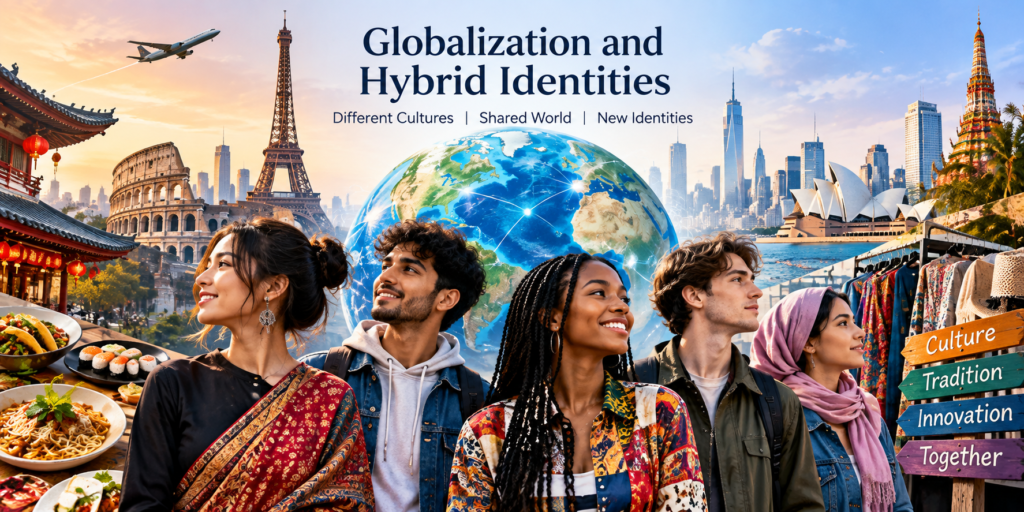
Globalization has rendered cultural boundaries far more fluid than in previous eras. Modern individuals comfortably navigate hybrid identity structures, consuming international media, adopting global workplace norms, and eating diverse cuisines while maintaining deep ties to their regional language, home cooking, and festive attire.
Rather than viewing globalization as a process that destroys local culture, it can be understood as an expanding landscape where individuals assemble multi-layered identities composed of inherited traditions and global influences.
Safeguarding Heritage and Mutual Respect
Practical Heritage Conservation
As urbanization, fast fashion, and industrial food processing accelerate, preserving authentic cultural heritage becomes an active responsibility. Preserving a culture does not require rejecting modern progress or freezing traditions in the past; rather, it requires keeping historical knowledge, craft skills, and social practices accessible for future generations.
Preservation occurs through simple, actionable choices:
- Domestic Continuity: Cooking traditional family meals regularly and documenting oral histories from older relatives.
- Supporting Artisans: Purchasing authentic, handcrafted textiles directly from traditional weaving cooperatives and local craftspeople.
- Community Engagement: Participating in regional cultural organizations, supporting local archives, and attending heritage events.
Respectful Cross-Cultural Engagement
In a diverse world, engaging with cultures outside one’s own requires mindfulness and humility. Food preferences, dress codes, and social customs vary dramatically between societies, and practices that seem unfamiliar to an outsider are often deeply meaningful within their original context.
Approaching cultural differences with respect, seeking to understand the historical reasoning behind unfamiliar customs, and acknowledging the intellectual and artistic rights of origin communities ensures that cross-cultural interactions remain enriching, fair, and constructive for all parties involved. Cultural identity ultimately thrives when traditions are both honored at home and respected across global communities.
FAQs
1. How does food shape cultural identity?
Food reflects family traditions, regional history, and cultural values.
2. How does fashion express cultural identity?
Fashion can showcase traditional clothing, local craftsmanship, and personal heritage.
3. Why are cultural traditions important?
They connect generations and help communities preserve their history and values.
4. How does culture change over time?
Culture evolves through travel, technology, social trends, and interaction between communities.
5. Why should we respect different cultures?
Respect helps people understand cultural differences and appreciate diverse traditions.