
Culture is one of the most interesting parts of being human. It shapes the way people eat, celebrate, communicate, dress, work, raise families, and spend time together. It can be found in a traditional recipe prepared at home, a festival celebrated every year, a song passed from parents to children, or a simple custom followed when welcoming a guest.
What makes culture fascinating is that it is different everywhere, yet many of the reasons behind our traditions are surprisingly similar. People everywhere want to celebrate important moments, remember their history, stay connected with family, and pass meaningful experiences to the next generation.
From the colorful festivals of India to traditional food markets in Asia, historic villages in Europe, Indigenous art and storytelling, and family customs around the world, every community has something worth discovering.
Culture also continues to change. Modern technology, travel, migration, social media, and changing lifestyles are influencing traditions in new ways. Some customs are becoming less common, while others are finding new life among younger generations.
Understanding these changes can help us appreciate both the diversity of the world and the connections we share.
What Is Culture?
Culture is much more than what we see during a festival or while visiting a historic site.
It includes the everyday habits, ideas, traditions, and creative expressions shared by a community. Language, food, clothing, music, art, celebrations, family practices, beliefs, architecture, and social customs can all be part of culture.
Culture can also vary within the same country.
India is a perfect example. A person traveling from one state to another may encounter a different language, cuisine, style of clothing, music, architecture, and set of traditions. Yet all of these regional identities contribute to the country’s wider cultural richness.
The same is true in many other parts of the world.
This is why it is difficult to describe an entire country with one cultural label. Every community has its own story.
Why Traditions Matter
Traditions give people a connection to the past.
Think about a family recipe that has been prepared for decades. The ingredients may be ordinary, but the memories attached to that dish can make it special. The same can be said about a traditional song, dance, celebration, or ceremony.
Traditions often provide a sense of belonging. They remind people where they came from and give families an opportunity to share experiences across generations.
However, traditions do not always remain exactly the same.
A younger generation may introduce new music to an old celebration. Families may change recipes based on ingredients available today. Traditional clothing may be redesigned for modern lifestyles.
These changes do not automatically mean that a tradition has lost its value. In many cases, adapting to a changing world is what allows a tradition to survive.
Food Is a Reflection of Culture

Food may be one of the easiest ways to understand a culture.
The dishes people prepare are often influenced by local ingredients, climate, agriculture, religion, history, and trade. Over time, these influences create cooking traditions that can become closely associated with a particular region.
India offers an excellent example of this diversity. Punjabi, Bengali, Gujarati, Rajasthani, Kashmiri, Maharashtrian, Kerala, and South Indian cuisines all have their own flavors and cooking methods.
The same variety can be found around the world.
Japanese cuisine, Mexican food, Italian cooking, Thai dishes, Turkish cuisine, Korean food, and Ethiopian cooking each have distinctive traditions.
But food culture is not only about famous dishes.
It is also about how people prepare and share meals. Family dinners, street-food markets, tea traditions, festive sweets, homemade snacks, and special recipes can tell us a lot about everyday life.
Sometimes, eating a simple homemade meal with a local family can teach you more about a place than visiting a popular restaurant.
Festivals Bring People Together
Festivals are an important part of cultural life in many communities.
They may celebrate religious beliefs, historical events, harvests, seasons, national occasions, or important moments in a community’s history.
Diwali, Holi, Eid, Christmas, Lunar New Year, Carnival, Songkran, and countless regional celebrations all have their own customs and meanings.
The celebrations may look completely different, but they often have something in common. They bring people together.
Families prepare special meals, visit relatives, decorate homes, exchange gifts, attend ceremonies, listen to music, and spend time with one another.
Modern technology has also become part of many celebrations. Relatives who live far away can join through video calls, greetings can be shared instantly, and photographs can connect family members across different countries.
This shows how traditions can adapt without necessarily losing their importance.
Traditional Clothing and Cultural Identity
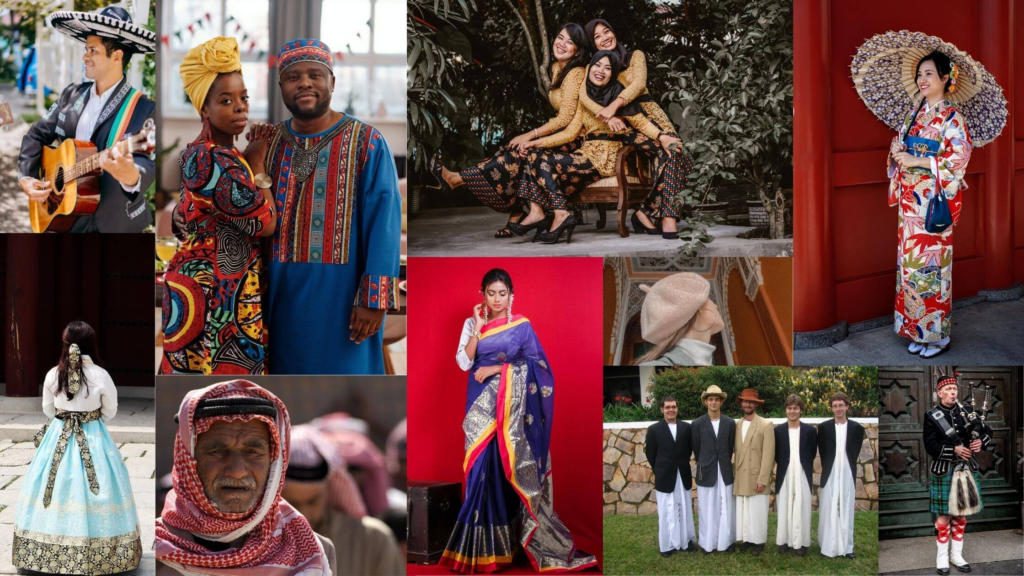
Clothing can reveal a great deal about a community’s history and identity.
Traditional garments are often influenced by climate, local materials, craftsmanship, religion, and social customs.
India has a huge variety of traditional clothing, including sarees, kurtas, lehengas, dhotis, salwar suits, and many regional styles.
Elsewhere, the kimono is strongly associated with Japanese culture, while the kilt has a long connection with Scottish heritage. Many African communities also have distinctive textiles and clothing styles that reflect local artistry and history.
Traditional clothing is often worn during weddings, festivals, religious ceremonies, and cultural events rather than as everyday clothing.
Modern designers are also finding ways to combine traditional fabrics and techniques with contemporary fashion. This gives older forms of craftsmanship a chance to remain relevant.
Language Keeps Cultural Knowledge Alive
Language is more than a method of communication.
It carries stories, expressions, humor, songs, names, and knowledge that have been passed from one generation to another.
Many countries have multiple languages, and individual regions may have their own dialects and expressions.
When a language becomes less common, cultural knowledge connected to that language can also become harder to preserve.
Technology can help. Communities can record traditional stories, create online lessons, publish digital dictionaries, and share language resources with younger generations.
At the same time, global communication has made widely spoken languages increasingly important.
Finding a balance between international communication and local languages will continue to be an important cultural challenge.
Music and Dance Tell Stories
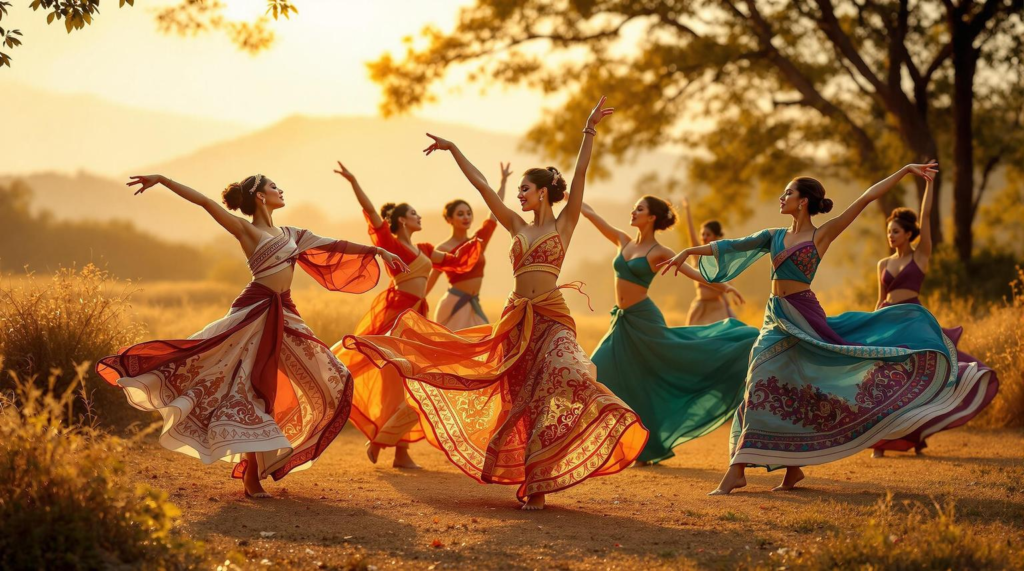
Music and dance can bring history to life in a way that words sometimes cannot.
Traditional songs and dances are often performed during weddings, festivals, religious ceremonies, and community gatherings. Some tell stories, while others are simply ways for people to celebrate together.
India has a wide range of classical and folk dance traditions. Other countries have their own musical instruments, performance styles, and traditional dances.
Today, younger artists are experimenting with these traditions.
A musician might combine a traditional instrument with modern sounds. A dancer might use an older style in a contemporary performance.
These combinations can introduce traditional art forms to people who may never have encountered them before.
Heritage Is More Than Historic Places
When people hear the word heritage, they often think about monuments, temples, forts, castles, museums, and archaeological sites.
These places are certainly important, but cultural heritage goes beyond physical objects.
Traditional crafts, storytelling, recipes, languages, music, dance, rituals, and local knowledge can also form part of a community’s heritage.
Imagine an old historic building that has been preserved for hundreds of years. The building itself is valuable, but so are the traditions and stories connected to it.
If the people who understand those traditions disappear from the community, something important can still be lost.
That is why protecting heritage should include supporting the people who keep cultural knowledge alive.
Traditional Crafts Deserve Recognition
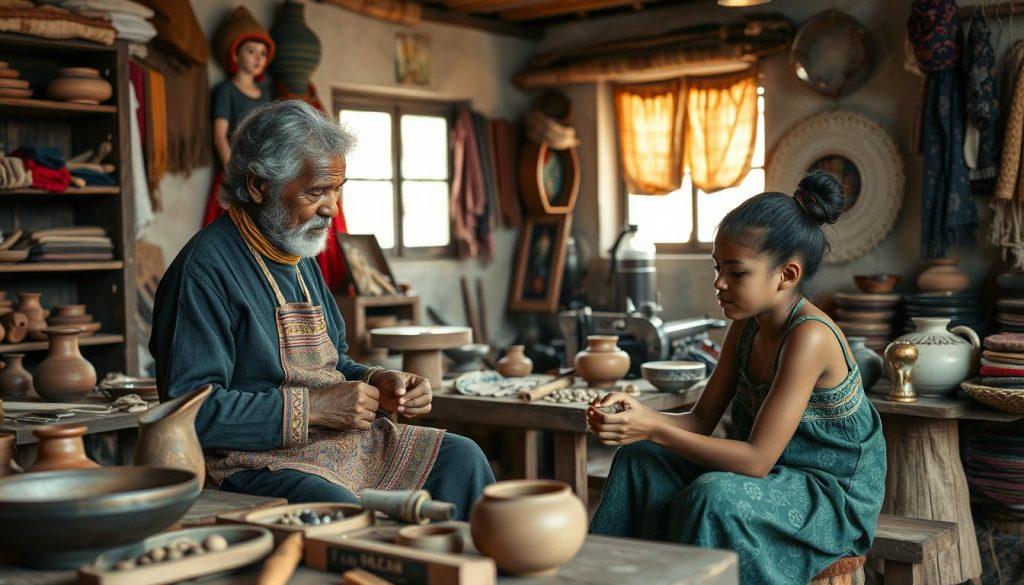
Traditional crafts often represent skills that have been developed over many generations.
Pottery, weaving, embroidery, wood carving, metalwork, jewelry making, painting, and basketmaking are just a few examples.
Handmade objects can feel particularly meaningful because they often carry a story. You may know where the item was made, what materials were used, and which traditional technique was involved.
For travelers, visiting a local craft workshop can be a memorable way to learn about a community.
It can also support craftspeople who depend on these skills for their livelihoods.
When traditional crafts are valued and fairly supported, younger people may have more reasons to learn those skills instead of allowing them to disappear.
FAQ’s
1. What is culture?
Culture includes the traditions, language, food, art, beliefs, and customs shared by a community.
2. Why are cultural traditions important?
They connect people with their history and help pass knowledge between generations.
3. What are examples of cultural heritage?
Historic places, traditional crafts, music, dance, languages, recipes, and festivals are examples.
4. How can I learn about other cultures?
Try local foods, attend cultural events, explore museums, learn about traditions, and talk respectfully with local people.
5. Does culture change over time?
Yes. Culture naturally evolves as communities adapt to new ideas, technology, and changing lifestyles.