
Science is one of the most important forces shaping the modern world. From understanding how the human body works to exploring distant planets and developing smarter technologies, scientific research continues to expand what we know and what we can achieve. Every year brings new discoveries, surprising facts, and innovative ideas that can change the way we live, work, communicate, and understand our planet.
The world of science is not limited to laboratories or universities. It is present in everyday life, from the smartphones we use and the medicines we depend on to the weather forecasts we check and the energy systems that power our homes. Learning about science can help us make better decisions and appreciate the remarkable world around us.
Why Science Matters in Everyday Life
Science helps explain many things that people experience every day. When we turn on a light, use a mobile phone, cook food, take medicine, or travel by air, we are benefiting from years of scientific research and technological development.
Scientific knowledge also helps society respond to major challenges. Researchers study climate change, infectious diseases, food production, pollution, energy resources, and natural disasters. Their work can provide evidence that helps governments, businesses, communities, and individuals make informed decisions.
Science also teaches people how to think critically. Instead of accepting every claim immediately, scientific thinking encourages us to ask questions, examine evidence, compare reliable information, and remain open to new findings.
Latest Discoveries Across the Scientific World
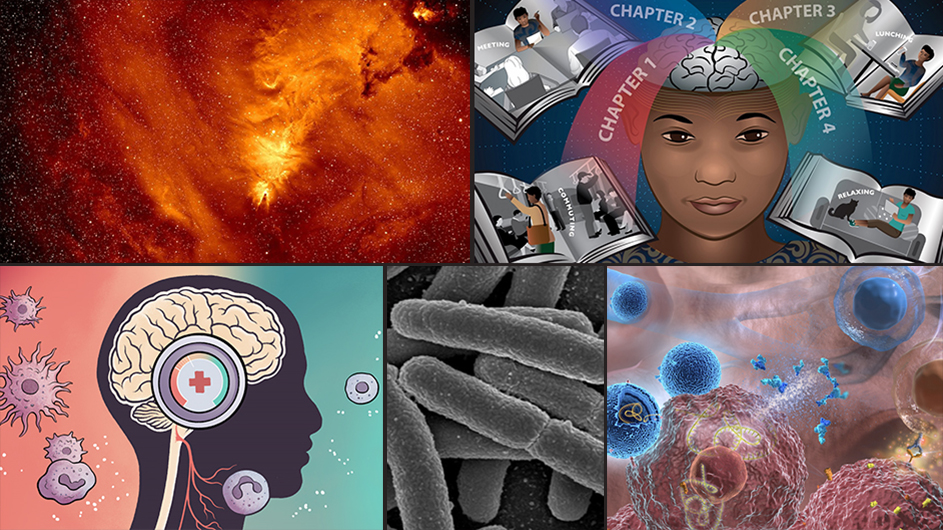
Scientific discovery happens in many different fields. Astronomy, biology, medicine, physics, chemistry, environmental science, and earth science all contribute to our understanding of the world.
Discoveries in Space
Space science continues to capture public attention. Modern telescopes and spacecraft allow scientists to observe objects that are incredibly distant from Earth. Researchers study planets, stars, galaxies, black holes, and other cosmic phenomena to learn more about how the universe developed.
Scientists are also searching for signs that conditions suitable for life may exist beyond Earth. The discovery of water-related environments, organic molecules, and potentially habitable worlds has made planetary science an especially exciting field.
Space exploration is not simply about finding new worlds. It can also improve knowledge about Earth’s atmosphere, climate, geology, and history.
Advances in Medicine and Biology
Medical science continues to develop through research into genetics, cell biology, diseases, nutrition, and the immune system. Researchers are studying how diseases develop and how treatments can be made more effective.
Genetics has become particularly important. Scientists can study DNA to understand inherited characteristics and investigate why certain diseases affect some people differently from others. Advances in biological research are also supporting new approaches to diagnosis and treatment.
However, scientific discoveries in medicine require careful testing. A promising laboratory result does not automatically mean that a treatment is safe or effective for everyone. Clinical research and independent evaluation remain essential before new medical approaches become widely available.
Environmental Science and Climate Research
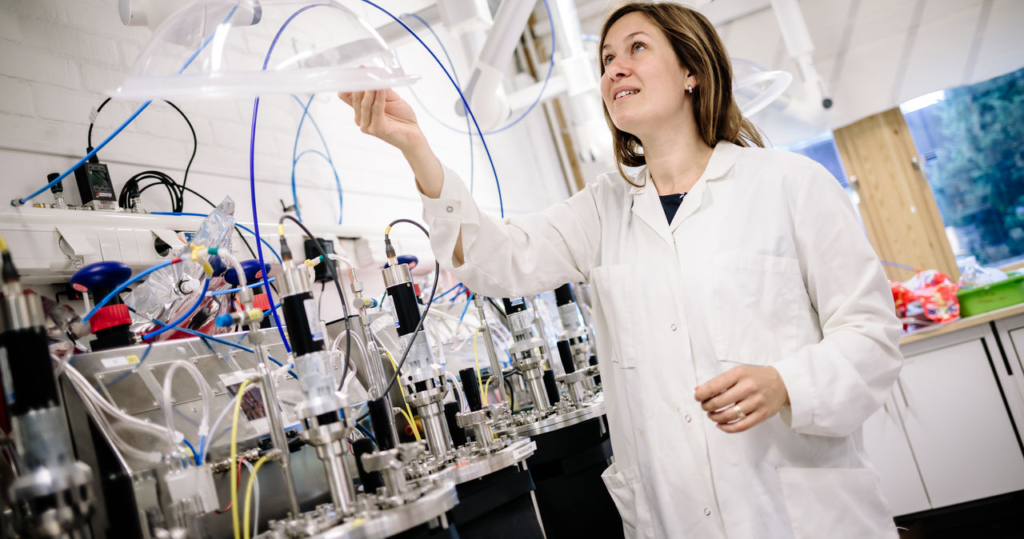
Environmental science has become increasingly important as communities face challenges involving climate, pollution, biodiversity, water resources, and sustainable development.
Researchers monitor changes in oceans, forests, glaciers, wildlife populations, and atmospheric conditions. Their work helps improve our understanding of how natural systems function and how human activities can influence them.
Science can also support practical solutions. Renewable energy, improved recycling methods, cleaner transportation, efficient buildings, sustainable farming, and better water management are examples of areas where research can contribute to a more sustainable future.
Fascinating Science Facts
Science becomes especially interesting when ordinary observations reveal something unexpected.
For example, the human body contains trillions of cells working together to support life. The brain communicates through complex networks of electrical and chemical signals, allowing people to think, remember, learn, move, and respond to their surroundings.
Earth itself is constantly changing. Mountains can rise and erode, continents move slowly over geological time, and oceans influence weather and climate around the world.
Another fascinating fact is that sunlight takes roughly eight minutes to travel from the Sun to Earth. That means when we observe sunlight, we are seeing light that left the Sun several minutes earlier.
These facts demonstrate an important point: science is not only about complicated formulas. It is also about discovering the hidden processes behind familiar experiences.
Technology and Scientific Innovation


Scientific research and technological innovation often develop together. Discoveries in physics, chemistry, biology, and computer science can eventually lead to products and systems that influence everyday life.
Artificial intelligence is one major example. Advances in computing, machine learning, and data analysis are allowing computers to identify patterns and perform increasingly sophisticated tasks. AI is being explored in fields such as healthcare, education, transportation, manufacturing, research, and communication.
Robotics is another rapidly developing area. Robots can perform tasks in factories, assist with dangerous operations, explore difficult environments, and support scientific research.
New materials are also being investigated for applications ranging from electronics and construction to energy storage. Innovations in batteries, solar technology, sensors, and communication systems could influence how future societies produce and use resources.
The Importance of Scientific Research
Behind every major discovery is usually a long process of research, testing, revision, and collaboration. Scientific progress rarely happens overnight.
Researchers begin with questions and develop hypotheses that can be tested. They collect observations or experimental data, analyse results, and compare their findings with existing knowledge. Other scientists may review, repeat, or challenge the work.
This process is important because science is designed to correct itself. When new evidence becomes available, earlier explanations can be improved or replaced.
That does not mean scientific knowledge is unreliable. Instead, it shows why evidence and continuous investigation are central to science.
How Science Can Shape the Future
he future of science is likely to involve even greater cooperation between different fields. A major problem may require knowledge from biology, computer science, engineering, environmental science, mathematics, and other disciplines at the same time.
Healthcare could benefit from better diagnostic technologies, personalised approaches, advanced medical devices, and deeper understanding of biology. Energy research could support cleaner and more efficient ways of producing and storing power.
Space exploration may also continue to expand. Future missions could provide new information about the Moon, Mars, asteroids, and distant planetary systems.
At the same time, scientific progress brings important questions. New technologies must be developed responsibly, with attention to safety, privacy, environmental impact, fairness, and long-term consequences.
How to Stay Updated With Science
Science changes constantly, so staying informed requires more than reading a single headline. Look for information from universities, research institutions, scientific organisations, reputable publications, and original research where possible.
When reading a science story online, consider who conducted the research, how large the study was, whether the findings have been independently reviewed, and whether the article accurately represents what the researchers actually discovered.
It is also helpful to distinguish between an early scientific result and an established conclusion. A single study can provide an interesting clue, but stronger conclusions generally require evidence from multiple studies.
The Value of Scientific Curiosity

Science begins with curiosity. Asking why the sky changes colour, how plants grow, what causes disease, how animals adapt, or how stars form can lead to deeper understanding.
You do not need to be a professional scientist to appreciate scientific discovery. Students, families, professionals, and curious readers can all benefit from learning how the natural world works.
Science also encourages humility. The more researchers discover, the more they realise there is still to learn. Questions about the universe, life, consciousness, Earth’s history, and the future continue to inspire new generations of researchers.
FAQ’s
1. What is science?
Science is the systematic study of the natural world through observation and evidence.
2. Why is scientific research important?
It helps us understand the world and develop solutions to real-world problems.
3. What are scientific innovations?
They are new ideas, methods, or technologies developed through scientific research.
4. How does science improve daily life?
Science supports advances in medicine, technology, energy, communication, and transportation.
5. How can I stay updated on science?
Follow reliable scientific organisations, research institutions, and trusted science publications.