
Living a healthier life doesn’t require strict rules, giving up your favorite foods, or spending hours at the gym every day. Real, lasting wellness comes from tiny, realistic choices that you can effortlessly repeat over time.
The way you sleep, eat, move, manage stress, and protect your energy forms the foundation of how you feel. Instead of trying to overhaul your entire life overnight, focusing on a few simple habits and building momentum gradually is far more effective.
Start Small to Build Lasting Momentum
One of the biggest mistakes when trying to improve your health is taking on too many changes at once. A radical new routine feels exciting for a few days, but burnout sets in quickly when it demands too much willpower.
Instead, start with one manageable adjustment:
- Drink an extra glass of water every morning.
- Take a ten-minute walk after lunch.
- Add a portion of vegetables to your dinner.
- Set a consistent wind-down time before bed.
┌──────────────────────┬──────────────────────────────────────────────┐
│ APPROACH             │ LONG-TERM OUTCOME                            │
├──────────────────────┼──────────────────────────────────────────────┤
│ Total Lifestyle Reset│ High short-term effort, rapid burnout risk  │
│ Micro-Habit Stacking │ Low initial effort, sustainable for years   │
└──────────────────────┴──────────────────────────────────────────────┘
Once a small habit feels automatic, stack another one on top of it. Tiny improvements might feel insignificant on day one, but compounded over months and years, they completely transform your quality of life.
Prioritize Restful Sleep

Quality sleep is non-negotiable for physical and mental recovery. It restores your immune system, regulates appetite, and sharpens your focus for the day ahead.
To improve your sleep quality:
- Maintain a strict schedule: Go to bed and wake up at similar times, even on weekends, to align your internal circadian clock.
- Design a quiet environment: Keep your bedroom dark, cool, and free from noise disturbances.
- Establish a wind-down routine: Put away phones, tablets, and laptop screens at least 30 minutes before bed to allow your brain to produce melatonin naturally.
If you deal with persistent insomnia, daytime exhaustion, or chronic sleep disruptions, consult a qualified healthcare professional to rule out underlying issues like sleep apnea.
Nourish Your Body Without Extreme Diets
Healthy eating shouldn’t feel like a punishment. Instead of falling for extreme restrictions or quick-fix cleanses, aim for variety, balance, and sustainability.
Focus on building meals around whole plant foods, lean proteins, whole grains, and healthy fats. Rather than obsessing over what foods to eliminate, shift your mindset toward what nutritious options you can add to your plate.
┌─────────────────────┬──────────────────────────────────────────────┐
│ FOOD GROUP          │ EVERYDAY NUTRITIONAL BENEFITS                │
├─────────────────────┼──────────────────────────────────────────────┤
│ Whole Vegetables    │ High fiber, essential vitamins, low calorie  │
│ Lean Proteins       │ Supports muscle repair, long-lasting satiety │
│ Complex Carbs       │ Steady, slow-burning energy throughout the day│
│ Healthy Fats        │ Supports hormone health and joint function   │
└─────────────────────┴──────────────────────────────────────────────┘
There is always room for your favorite treats in a balanced lifestyle. Eating well isn’t about eating perfectly; it’s about making nourishing choices the default while enjoying food without guilt.
Keep Hydration Effortless
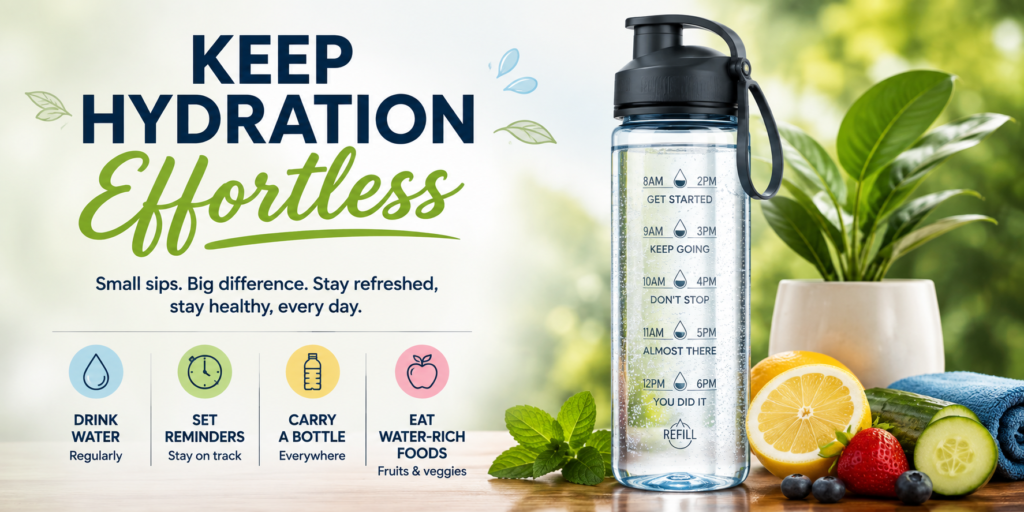
Water plays a critical role in digestion, energy levels, and brain function. Mild dehydration often hides as fatigue, brain fog, or unexpected hunger pangs.
- Keep a reusable water bottle within arm’s reach while working or relaxing.
- Drink a glass of water first thing in the morning to rehydrate after sleep.
- Increase your intake when exercising, spending time outdoors, or in hot weather.
Hydration needs vary based on your body size, climate, and activity level. Pay attention to how you feel throughout the day rather than obsessing over a rigid gallon-a-day goal.
Move Regularly and Break Up Sitting Time
Exercise doesn’t have to mean grueling gym workouts. Walking, cycling, swimming, dancing, stretching, and playing recreational sports all contribute to a healthy, active body. The best form of exercise is simply the one you enjoy enough to do consistently.
┌─────────────────┬────────────────────────────────────────────────────────┐
│ MOVEMENT TYPE   │ PRACTICAL WAYS TO FIT IT IN                            │
├─────────────────┼────────────────────────────────────────────────────────┤
│ Daily Cardio    │ Brisk walking, cycling, taking the stairs             │
│ Functional Strength│ Push-ups, bodyweight squats, carrying groceries     │
│ Mobility & Flex │ Evening stretching, yoga, joint rotations              │
└─────────────────┴────────────────────────────────────────────────────────┘
Modern life keeps most of us sitting for hours at a desk or in front of screens. Interrupt long periods of inactivity by standing up every hour, stretching, or taking quick two-minute walking loops around your workspace.
Nurture Emotional and Mental Well-Being
Physical fitness is only half the picture. Taking care of your emotional health is just as vital for everyday vitality.
When stress accumulates from work, finances, or personal commitments, give yourself explicit permission to slow down:
- Unwind with a book, music, or a hands-on hobby.
- Spend time outdoors in green spaces to lower stress hormones.
- Practice brief deep-breathing exercises to reset your nervous system.
- Set firm boundaries around your work hours and personal availability.
Rest is not a reward for productivity; it is a fundamental biological requirement. Protecting your quiet time prevents emotional exhaustion and keeps you grounded.
Create a Space That Makes Healthy Choices Easy

Your environment shapes your behavior far more than raw willpower ever will. Design your physical surroundings to make positive choices effortless and unhelpful habits slightly more inconvenient.
- Leave healthy snacks like fresh fruit or nuts visible on the counter.
- Set out your walking shoes or workout clothes the night before.
- Keep a water bottle at your desk so you don’t have to get up every time you’re thirsty.
- Store distracting items or ultra-processed snacks out of immediate sight.
By lowering the friction required to make a good choice, you make healthy living the path of least resistance.
Cultivate Genuine Social Connections and Preventive Care
Human beings are wired for connection. Cultivating strong, supportive relationships with family, friends, and community members lowers stress and improves long-term health outcomes. Prioritize quality interactions over a massive social circle.
Additionally, stay proactive with preventive medical care. Schedule regular health checkups, dental cleanings, and appropriate screenings based on your age and medical history. Rather than relying on unreliable internet searches when new symptoms arise, consult a licensed healthcare provider for personalized medical advice.
Ditch the All-or-Nothing Mindset
A healthy lifestyle does not demand perfection. Missing a workout, eating a heavy meal, or having a chaotic week doesn’t mean your efforts are ruined.
Wellness is defined by your overall long-term pattern, not isolated moments. When you slip up, simply return to your routine at the very next opportunity without guilt or dramatic compensation. Consistency, patience, and self-compassion are what transform small daily choices into a lifetime of good health.
FAQ’s
1. What is the easiest way to build healthy habits?
Start with small, realistic changes such as walking regularly, drinking enough water, and maintaining a consistent sleep routine.
2. How much exercise should I get?
Aim for regular physical activity that fits your fitness level and lifestyle. Include a mix of movement, aerobic activity, and strength exercises when appropriate.
3. Why is sleep important for wellness?
Quality sleep supports physical recovery, energy, concentration, and overall well-being.
4. How can I manage everyday stress?
Take regular breaks, stay physically active, spend time with supportive people, and make room for relaxing activities.
5. Does healthy living require a strict diet?
No. A balanced, varied diet with mostly nutritious foods can support wellness without requiring extreme restrictions.