
Science helps us understand the world around us. From the food we eat and the air we breathe to distant galaxies and microscopic organisms, scientific research allows us to explore how nature works and how new ideas can improve our lives.
Science can sometimes seem complicated because researchers use specialized terms, advanced equipment, and complex methods. But the basic ideas behind many scientific discoveries can be explained in simple language.
From medicine and biology to space exploration, climate research, physics, chemistry, and technology, scientific progress continues to expand our understanding of the world. This guide explores major areas of science, how research works, and why scientific innovation matters in everyday life.
What Is Science?
Science is a systematic way of learning about the natural world.
Scientists observe things, ask questions, develop explanations, test ideas, collect evidence, and revise their conclusions when new information becomes available.
Science is not simply a collection of facts. It is an ongoing process of investigation.
A scientific idea becomes stronger when it is supported by reliable evidence and can be tested or examined by others. This process helps researchers distinguish between explanations that are well supported and ideas that need more investigation.
Why Scientific Research Matters

Scientific research helps society understand problems and develop possible solutions.
Research can contribute to advances in healthcare, agriculture, energy, transportation, communication, environmental protection, and many other fields.
Some discoveries may have immediate practical applications, while others may seem purely theoretical at first. Over time, basic research can lead to technologies and innovations that were not originally expected.
For this reason, scientific progress is often built from many small discoveries rather than one single breakthrough.
Biology: Understanding Living Things
Biology focuses on living organisms, including humans, animals, plants, fungi, and microorganisms.
Modern biology examines everything from individual cells to entire ecosystems.
Researchers study how organisms grow, reproduce, adapt, communicate, and interact with their environments.
Genetics is an important part of modern biology. Scientists study DNA and how genetic information influences characteristics and biological processes.
Advances in biological research can contribute to better understanding of diseases, agriculture, conservation, and human health.
The Growing Importance of Genetics
Genetics has become one of the most important areas of modern biological research.
Scientists can study DNA to understand how traits are inherited and how changes in genetic material may influence biological processes.
Genetic research has also contributed to developments in medical testing and research.
However, genetics is complex. Many characteristics are influenced by combinations of genes and environmental factors rather than a single genetic factor.
As research continues, scientists are learning more about how genetic information interacts with lifestyle and the environment.
Medical Research and Human Health

Medical science aims to understand diseases, improve diagnosis, develop treatments, and support healthier lives.
Researchers study everything from individual cells and molecules to organs, immune responses, and entire populations.
Clinical research plays an important role in determining whether new medical approaches are safe and effective.
Modern medical research also increasingly uses data, imaging technologies, genetic information, and computational tools.
While scientific progress can be exciting, medical discoveries require careful testing. A promising early result does not automatically mean that a treatment is ready for widespread use.
Artificial Intelligence and Science
Artificial intelligence is increasingly being used as a research tool.
AI systems can help researchers analyze large datasets, identify patterns, process images, model complex systems, and explore possible solutions.
In some areas, computational tools can examine information much faster than traditional manual methods.
However, AI does not eliminate the need for scientists. Researchers still need to determine whether results are accurate, meaningful, and supported by evidence.
The combination of human expertise and computational tools may allow researchers to explore scientific questions more efficiently.
Space Science and Exploration
Space remains one of the most fascinating areas of scientific research.
Astronomers study planets, stars, galaxies, black holes, and other objects to understand how the universe formed and how it continues to change.
Space missions also provide opportunities to study planetary environments and test technologies that could support future exploration.
Telescopes have allowed scientists to observe extremely distant objects and investigate the history of the universe.
Space science does not only answer questions about distant worlds. It can also improve our understanding of Earth, the Sun, and the broader environment in which our planet exists.
Climate and Environmental Science
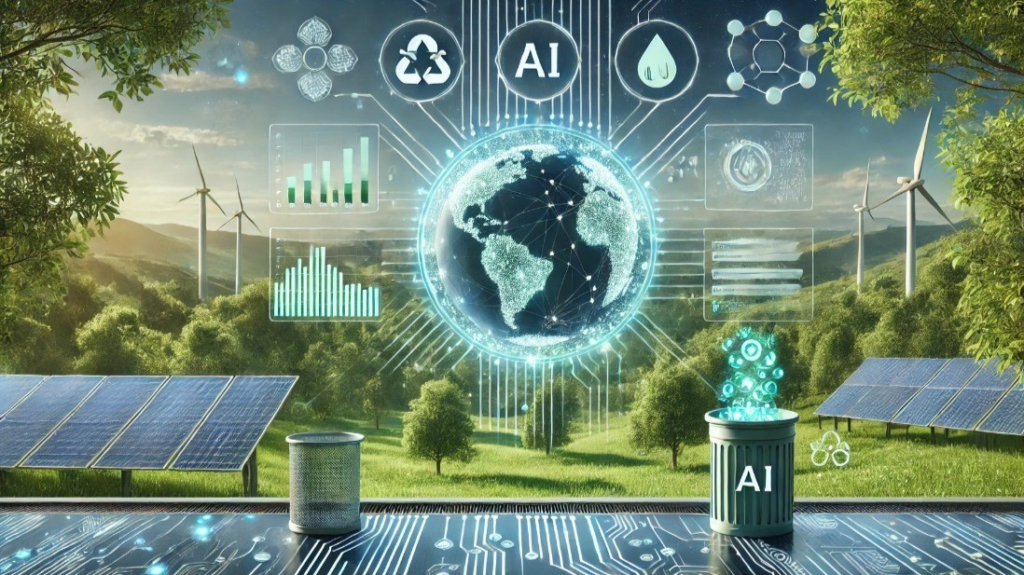
Environmental science examines the relationship between humans, ecosystems, and the natural world.
Researchers study temperature changes, oceans, forests, biodiversity, pollution, atmospheric processes, and other environmental factors.
Climate science uses observations, measurements, historical records, and models to understand how Earth’s climate behaves and how it changes over time.
Scientific research can help communities make better decisions about energy, conservation, agriculture, water management, and environmental protection.
Renewable Energy Research
Energy science is another major area of innovation.
Researchers are exploring ways to produce, store, and use energy more efficiently.
Solar and wind technologies have developed significantly, while research continues into batteries, energy storage, advanced materials, and other technologies.
Energy storage is particularly important because renewable energy sources can vary depending on weather and time of day.
Scientific advances in energy systems may help improve reliability and reduce environmental impacts.
Physics: Understanding the Rules of Nature
Physics studies matter, energy, motion, forces, space, and time.
It helps explain everyday experiences, from why objects fall to how electricity works.
Physics also explores conditions far beyond ordinary human experience, including extremely small particles and massive astronomical objects.
Research in areas such as quantum physics and particle physics continues to investigate fundamental questions about how nature works.
Some discoveries may not have immediate practical applications, but they can expand our understanding of the universe and eventually influence future technologies.

Chemistry examines substances, their properties, and how they interact.
Modern chemistry plays a role in medicine, agriculture, manufacturing, energy, electronics, food science, and environmental research.
Scientists are also developing and studying new materials with specific properties.
Advanced materials may be designed to be stronger, lighter, more conductive, more durable, or more efficient.
These developments can contribute to improvements in electronics, transportation, construction, energy systems, and other industries.
The Importance of Scientific Evidence
One of the most important parts of science is evidence.
Scientific claims should be supported by observations, experiments, measurements, or other reliable forms of data.
Researchers also consider uncertainty. Scientific knowledge can change when stronger evidence becomes available.
This does not mean that science is unreliable. It means that science is designed to improve its understanding as new information emerges.
Being willing to revise an explanation when evidence changes is one of the strengths of the scientific process.
Peer Review and Scientific Communication
Scientific research is often shared through academic publications, conferences, datasets, and other forms of communication.
Peer review allows other researchers to examine a study’s methods, evidence, analysis, and conclusions before or around publication, depending on the research field and publication process.
It does not guarantee that every published study is correct. However, it provides an important layer of scientific scrutiny.
Researchers also attempt to reproduce important findings and compare results from different studies.
This process helps the scientific community build a more reliable understanding over time.
Why Scientific Discoveries Take Time
A major scientific breakthrough can appear sudden in the news, but the research behind it may have taken many years.
Scientists often conduct repeated experiments, collect large amounts of data, test alternative explanations, and deal with unexpected results.
A promising idea may require years of development before it becomes a practical technology.
Patience is therefore an important part of scientific research.
The Role of Technology in Modern Science
Technology has transformed the way researchers conduct experiments and analyze information.
Advanced microscopes allow scientists to study extremely small structures. Powerful telescopes reveal distant objects. Computers can model complex systems and process enormous datasets.
Sensors can collect environmental information over long periods, while automated laboratory systems can perform repetitive experiments.
Technology does not replace scientific thinking. Instead, it gives researchers new ways to ask and investigate questions.
Science in Everyday Life
Science is not limited to laboratories or universities.
It influences many parts of everyday life.
Cooking involves chemistry and changes in physical properties. Weather forecasts depend on atmospheric science and data analysis. Smartphones rely on physics, materials science, engineering, and computer science.
Even simple activities such as exercising, growing plants, preserving food, and cleaning involve scientific principles.
Understanding basic science can therefore help people make more informed decisions in daily life.
How to Follow New Scientific Discoveries

Scientific news appears every day, but not every headline accurately represents the importance of a study.
When reading about a new discovery, look for information about the original research, study size, methods, limitations, and whether other researchers have reported similar results.
Be cautious about headlines that make dramatic claims without explaining the evidence.
A single study rarely settles a complicated scientific question. Stronger conclusions usually come from multiple lines of evidence.
The Future of Scientific Innovation
Future research will likely involve increasing collaboration between different scientific fields.
Biology may combine with computing. Materials science may support energy research. AI may help analyze biological or astronomical data. Environmental science may work alongside engineering to develop practical solutions.
Many of the most important challenges facing society are too complex for one field to solve alone.
Collaboration can bring together different perspectives, tools, and forms of expertise.
Why Curiosity Matters
Many scientific discoveries begin with a simple question.
Why does something happen? How does it work? Can it be improved? What happens if conditions change?
Curiosity encourages people to investigate rather than simply accept assumptions.
This is valuable not only for professional scientists but also for students, educators, and anyone interested in learning.
Science teaches us that asking better questions can be just as important as finding answers.
FAQ’s
1. What is science?
Science is a systematic way of studying and understanding the natural world using evidence and testing.
2. Why is scientific research important?
Research helps us understand problems and develop new knowledge, technologies, treatments, and solutions.
3. What are major areas of science?
Major fields include biology, chemistry, physics, astronomy, environmental science, and medical science.
4. How are scientific discoveries tested?
Scientists use observations, experiments, data analysis, peer review, and repeated research to evaluate findings.
5. How does science affect everyday life?
Science influences healthcare, technology, food, energy, transportation, communication, and many daily activities.