
Artificial intelligence has officially crossed the line from a futuristic tech buzzword into an indispensable part of modern science. Across almost every field imaginable—from oncology labs and climate stations to deep-space observatories—AI is fundamentally changing how we look at data.
It isn’t about replacing the human element; it’s about giving researchers a superpowered lens. As the questions we ask about our world grow more complex, traditional methods simply can’t keep up with the sheer volume of information we collect. AI steps in to handle the heavy lifting, allowing scientists to put their energy into what they do best: thinking critically, asking the right questions, and solving massive global problems.
Cutting Through the Data Avalanche

In the past, one of the biggest bottlenecks in any study was the sheer gridlock of data analysis. Gathering data from a massive experiment is one thing; spending months manually sorting through spreadsheets, looking for a needle in a haystack, is another.
AI algorithms can slice through mountains of information in minutes. It isn’t just about raw speed, either; these systems are incredibly good at spotting subtle, hidden correlations that the human eye might miss entirely. By automating the tedious task of data sorting, the technology gives scientists their most precious asset back: time. Instead of playing data entry clerk, they can spend their days developing theories and validating real-world results.
A Faster Path to Saving Lives
Nowhere is this shift more tangible than in healthcare. Medical research is historically a slow, grueling process, but intelligent systems are helping speed up the timeline for breakthroughs.
By analyzing thousands of genetic profiles, patient records, and complex medical imagery all at once, these tools help researchers pinpoint the exact markers of specific illnesses. This has opened the door to highly personalized medicine tailored to an individual’s unique genetic makeup. Furthermore, drug discovery—a process that used to take a decade and billions of dollars—is being accelerated as algorithms simulate millions of chemical interactions in seconds, narrowing down the best candidates for life-saving treatments long before they ever hit a physical lab.
Decoding a Changing Planet
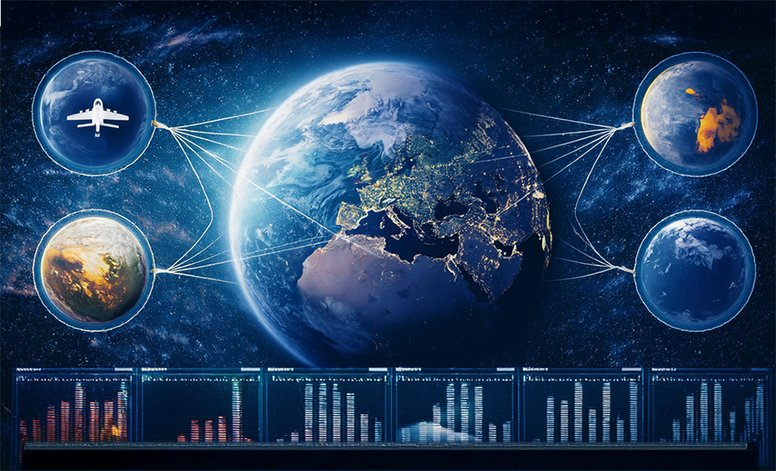

For environmental and climate scientists, AI acts as a crucial early-warning system. The Earth is a massively interconnected puzzle, and understanding it requires looking at decades of satellite images, ocean temperatures, and weather patterns simultaneously.
Machine learning models excel at this kind of pattern recognition. They allow researchers to track deforestation in real-time, monitor endangered wildlife populations, and predict extreme weather events with far greater precision than before. Armed with better data and more accurate forecasting models, policymakers and scientists can build much more effective strategies to protect natural resources and tackle climate change head-on.
Eyes on the Deep Universe
Space exploration has always been a game of numbers, and today, those numbers are astronomical. Modern telescopes and space probes stream back far more data than a human team could ever review in a lifetime.
Space agencies rely on intelligent systems to sift through this static, automatically flagging new planets, distant galaxies, and strange stellar anomalies. Beyond just sorting photos of deep space, this technology handles autonomous navigation for rovers and probes. In hostile environments where communications lag makes direct human control impossible, these vehicles use onboard systems to make split-second decisions, allowing us to explore worlds we can’t physically reach yet.
The Smart Laboratory


The day-to-day reality inside modern research facilities is also looking very different. Automation has moved far beyond simple machinery; we now have smart laboratories where robotic systems handle routine, repetitive procedures with flawless precision.
When robots handle liquid handling or repetitive plating tasks, the margin for human error plummets. More importantly, these automated systems can monitor experiments in real-time, adjusting variables on the fly to optimize conditions. This seamless blend of robotics and analytical intelligence keeps labs running safely and productively around the clock.
Tearing Down the Walls Between Disciplines
Great science rarely happens in a vacuum, but language barriers and scattered databases have historically isolated research teams. AI is quietly solving this by acting as a universal translator and knowledge curator.
Smart search engines can crawl through millions of published papers across different fields, instantly drawing connections between independent studies that might otherwise have stayed buried in separate journals. By making global knowledge accessible and pointing out unexpected overlaps between disciplines, these tools are fostering a brand-new wave of collaborative, cross-border innovation.
The Reality Check: Bias and Human Oversight
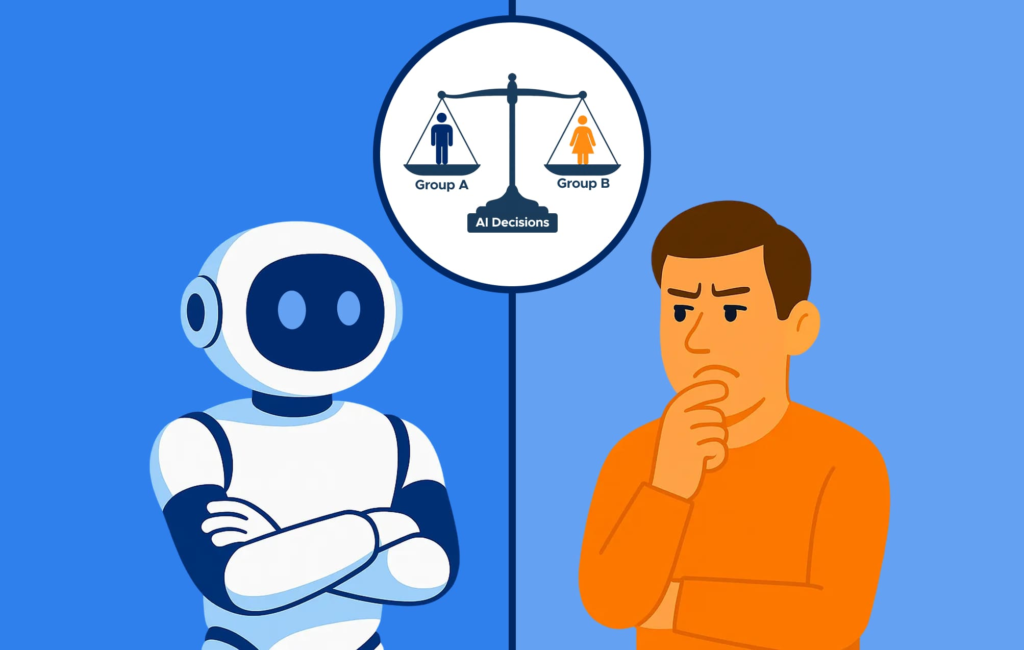
For all its incredible potential, this technology isn’t magic, and it certainly isn’t flawless. An algorithm is only as good as the information we feed it. If the baseline data is biased, incomplete, or corrupted, the resulting conclusion will be too.
This creates a massive responsibility for the scientific community. Models must be transparent and reliable, and protecting sensitive, private data is non-negotiable if we want to maintain public trust. At the end of the day, a computer can find a pattern, but it cannot understand its ethical weight. Human oversight remains entirely irreplaceable for interpreting results, verifying conclusions, and making the moral calls that define responsible progress.
Looking Ahead
We are watching a profound evolution in how human knowledge is generated. From accelerating clinical trials to tracking planetary shifts, artificial intelligence has solidified its place as the ultimate assistant to human curiosity.
It isn’t a replacement for human genius; it’s an amplifier for it. By taking over the tedious, repetitive elements of research, it frees up the human mind to focus on genuine creativity and innovation. The teams and institutions that learn to collaborate with these tools safely and ethically are the ones that will define the next century of scientific .
FAQ’s
1. What is artificial intelligence in scientific research?
Artificial intelligence in scientific research refers to the use of AI technologies to analyze data, automate experiments, identify patterns, and support scientific discoveries across various fields.
2. How does AI help scientists conduct research faster?
AI processes large datasets quickly, automates repetitive tasks, and identifies valuable insights, allowing researchers to complete studies more efficiently.
3. Which scientific fields benefit the most from AI?
AI is widely used in healthcare, biotechnology, environmental science, astronomy, physics, chemistry, and engineering to improve research accuracy and speed.
4. Can artificial intelligence replace scientists?
No. AI is designed to assist scientists by handling complex data analysis and routine tasks, while human researchers provide creativity, critical thinking, and decision-making.
5. What are the main challenges of using AI in scientific research?
Key challenges include data quality, algorithm bias, privacy concerns, ethical considerations, and the need for human oversight to ensure accurate and responsible research outcomes.