
NASA astronaut Sunita Williams has officially stepped down, bringing to a close one of the most inspiring and influential careers in modern space exploration. Known worldwide for her resilience, technical excellence, and calm leadership beyond Earth, Sunita Williams’ retirement marks the end of an era at NASA. Over decades of service, she not only represented the pinnacle of human spaceflight but also became a symbol of inspiration for aspiring astronauts, scientists, and engineers across the globe.
Her journey reflects dedication, courage, and groundbreaking achievement, making her legacy one of the most respected in NASA’s history.
- Early Life and the Path to NASA
- Sunita Williams’ First Space Mission: Expedition 14/15
- Record-Breaking Spacewalks and Endurance
- Commanding the International Space Station
- Scientific Contributions and Research Impact
- Training the Next Generation of Astronauts
- Why Sunita Williams’ Retirement Matters
- A Lasting Legacy in Space History
Early Life and the Path to NASA
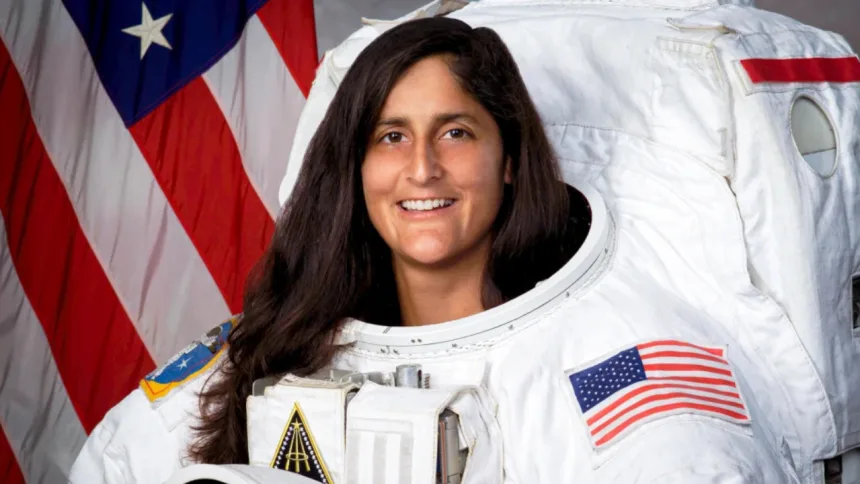
Born in the United States with Indian heritage, Sunita Williams developed an early fascination with aviation and science. She pursued engineering studies and later joined the U.S. Navy, where she became a helicopter pilot and test pilot. This background proved critical, as NASA values operational precision, adaptability, and calm decision-making, qualities Williams demonstrated consistently.
Her selection as a NASA astronaut was not just a personal achievement but a testament to years of disciplined service, advanced training, and unwavering commitment.
Sunita Williams’ First Space Mission: Expedition 14/15
Sunita Williams first traveled to space in 2006 as part of Expedition 14/15 aboard the International Space Station (ISS). This mission quickly established her as a standout astronaut.
During this expedition, she spent over six months in orbit, conducting scientific experiments, maintaining station systems, and participating in spacewalks. Her ability to manage complex tasks in microgravity impressed mission controllers and fellow astronauts alike.
One of the most notable highlights was her record-breaking endurance, as she logged extensive time outside the space station during extravehicular activities.
Record-Breaking Spacewalks and Endurance
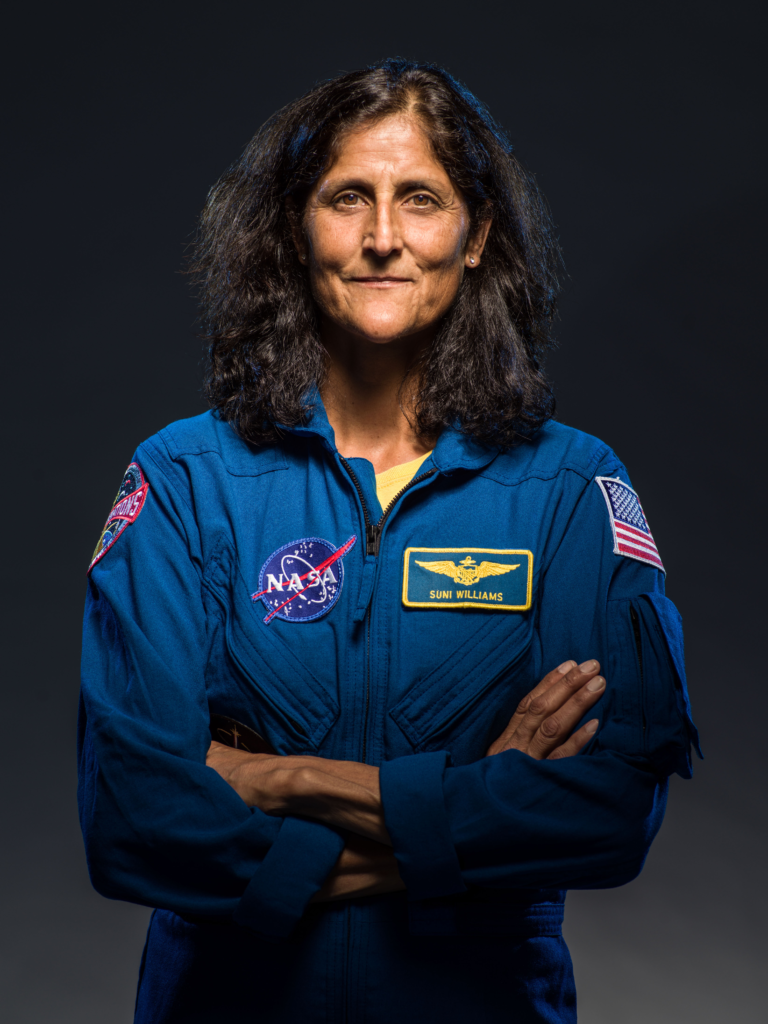
Among her most celebrated achievements, Sunita Williams completed multiple spacewalks, setting records that stood for years. These spacewalks involved critical tasks such as repairing station components, installing new hardware, and ensuring the long-term sustainability of the ISS.
Her total time spent in spacewalks placed her among the most experienced astronauts globally, reinforcing her reputation as a trusted and highly skilled space operator. Each mission required extreme physical endurance, precise coordination, and mental focus under immense pressure.
Commanding the International Space Station
In 2012, Sunita Williams returned to the ISS as part of Expedition 32/33, where she made history by becoming one of the few women to command the International Space Station.
As ISS Commander, she led multinational crews, coordinated scientific research, and ensured safety aboard one of the most complex structures ever built by humans. Her leadership style was widely praised for being calm, inclusive, and highly effective.
This role cemented her position as a trailblazer for women in space leadership, proving that excellence in command transcends gender and background.
Scientific Contributions and Research Impact
Throughout her missions, Sunita Williams contributed to hundreds of scientific experiments spanning biology, physics, climate science, and human health. Research conducted during her time in orbit helped scientists better understand:
- How the human body adapts to long-duration spaceflight
- The effects of microgravity on muscle and bone density
- Technological advancements needed for future Mars missions
These experiments continue to influence space medicine and deep-space exploration planning, making her contributions valuable far beyond her active service years.
Training the Next Generation of Astronauts
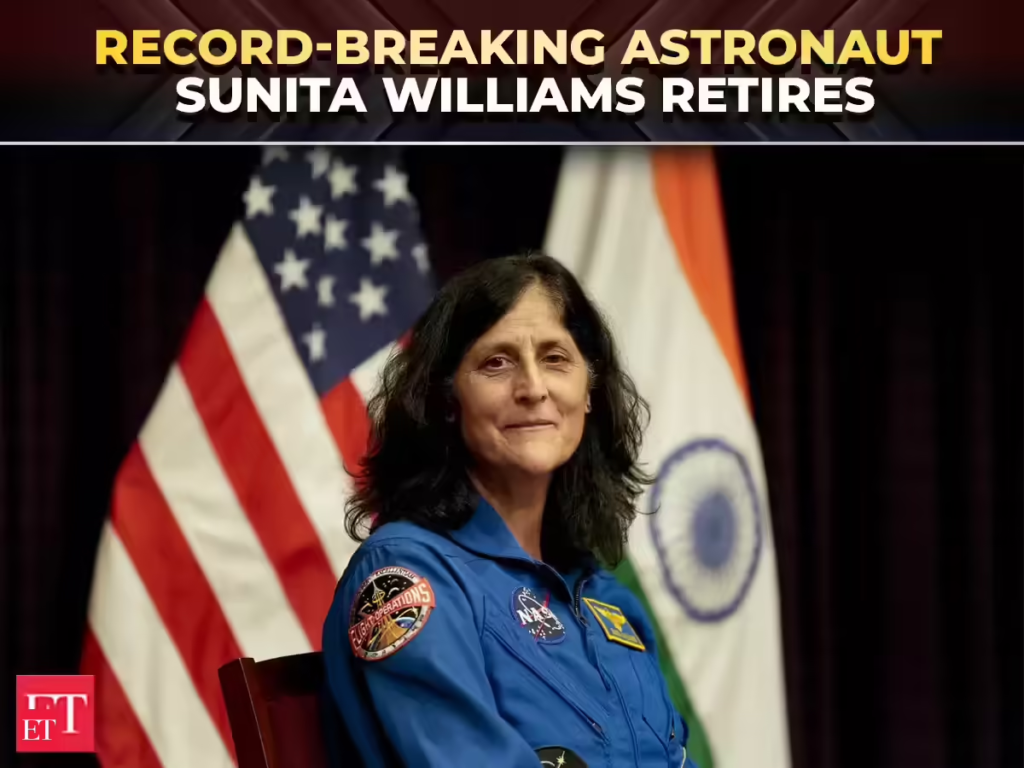
Beyond spaceflight, Sunita Williams played a crucial role on Earth by mentoring younger astronauts and supporting NASA’s next-generation missions. She was involved in training programs related to commercial crew spacecraft, mission simulations, and astronaut preparedness.
Her experience helped shape NASA’s evolving approach as the agency transitioned toward commercial partnerships and deep-space ambitions.
Why Sunita Williams’ Retirement Matters
Sunita Williams stepping down is more than a personal milestone—it represents a shift in NASA’s astronaut era. As space exploration moves toward lunar bases and Mars missions, her career stands as a benchmark for excellence, discipline, and international collaboration.
Her retirement also highlights the growing legacy of astronauts who helped turn the ISS into a permanent hub of scientific discovery, paving the way for future explorers.
A Lasting Legacy in Space History
Even after retirement, Sunita Williams’ influence will remain deeply embedded in NASA’s history. From record-setting missions to commanding the ISS, her achievements continue to inspire millions.
She leaves behind a legacy defined by:
- Unmatched professionalism
- Scientific contribution
- Leadership under extreme conditions
- Inspiration for future generations
As the world looks toward the next chapter of space exploration, Sunita Williams’ remarkable NASA space missions will forever stand as a shining example of human potential beyond Earth.
FAQs
#SunitaWilliams #SunitaWilliamsRetires #NASAAstronaut #NASA #SpaceMissions #InternationalSpaceStation #ISS #SpaceExploration #WomenInSpace #WomenInSTEM #Carrerbook#Anslation#SpaceScience #NASAHistory #SpaceLegacy #ScienceNews #GlobalNews